


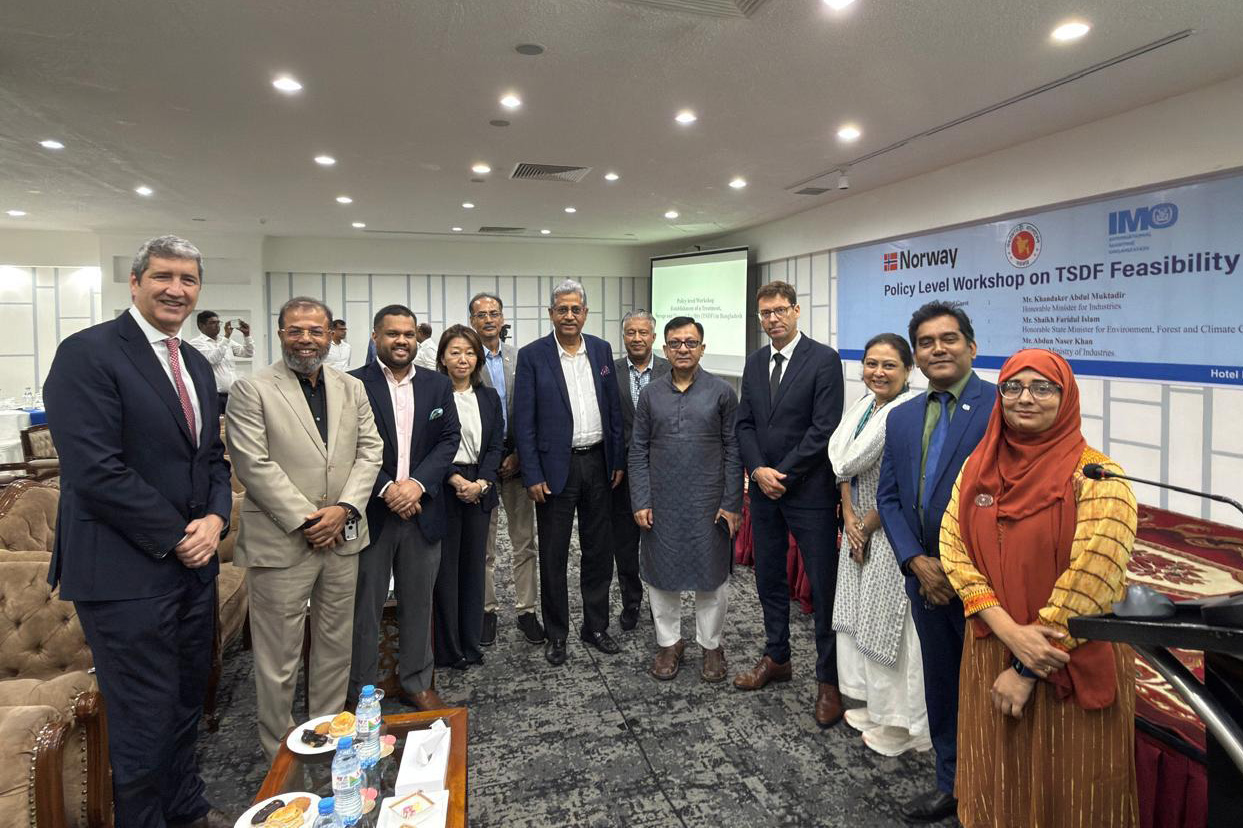
A high-level inter-ministerial briefing held in Dhaka on 31 August marked a significant step forward in Bangladesh’s efforts to establish its first Treatment, Storage and Disposal Facility (TSDF) for hazardous waste, planned for the Mirsarai Economic Zone. The event, organised under IMO’s SENSREC Bangladesh project, brought together senior government representatives to review the findings of a comprehensive feasibility study and discuss the path from planning to construction.
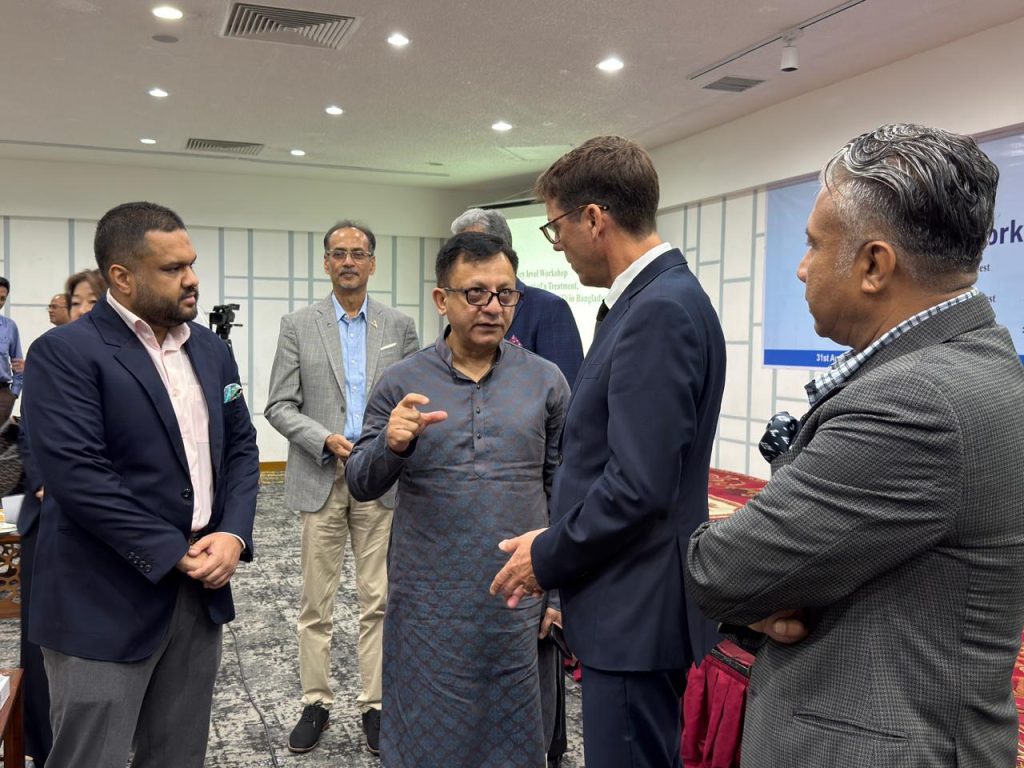
The meeting was addressed by the Minister of Environment, Forests and Climate Change and the Minister of Industries, both of whom expressed strong support for the facility and underlined its importance for Bangladesh’s industrial future. The Ministers highlighted that safe, compliant management of hazardous waste is not a regulatory formality but a practical necessity for a rapidly growing industrial economy — and that the TSDF will serve industries well beyond ship recycling, providing essential infrastructure for the many sectors operating within the Mirsarai catchment area.
Speaking on behalf of IMO, John Alonso described the occasion as a turning point and emphasised that while the feasibility study was initiated through IMO’s ship recycling programme, ship recycling will account for only a minority share of the facility’s capacity — making the TSDF a piece of national environmental infrastructure with benefits extending across all of Bangladesh’s industries.
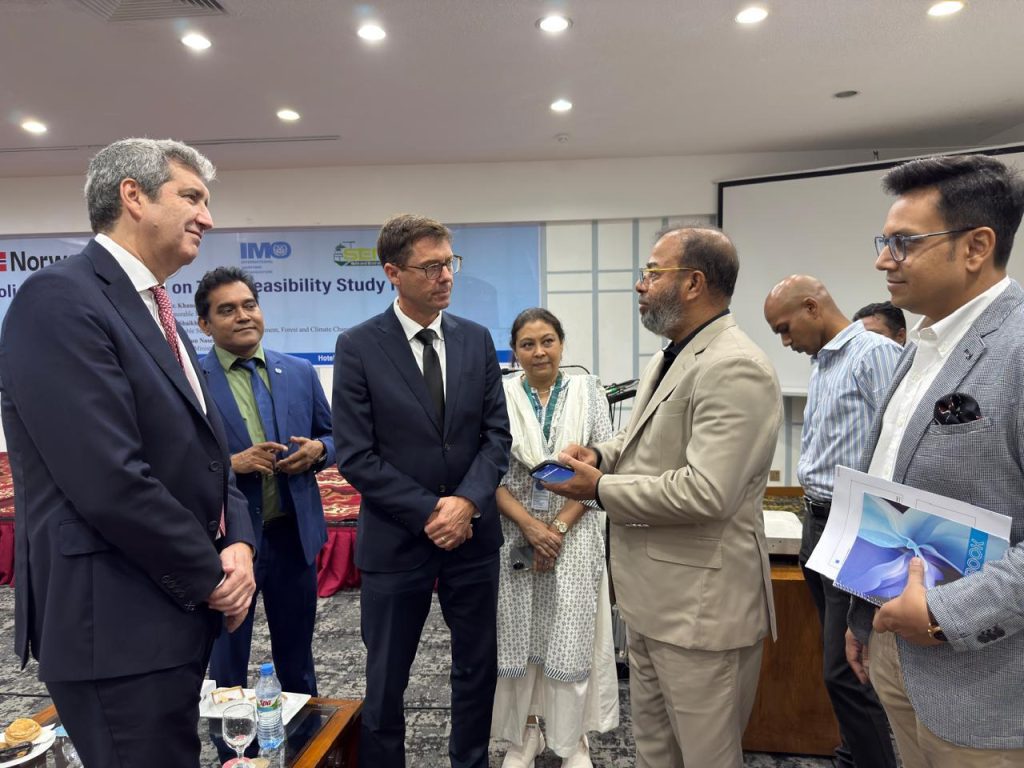
However, without a functioning TSDF, Bangladesh’s ship recycling industry cannot fully meet its obligations under the Hong Kong Convention and the Basel Convention — the international treaties governing safe and environmentally sound ship recycling and hazardous waste management.
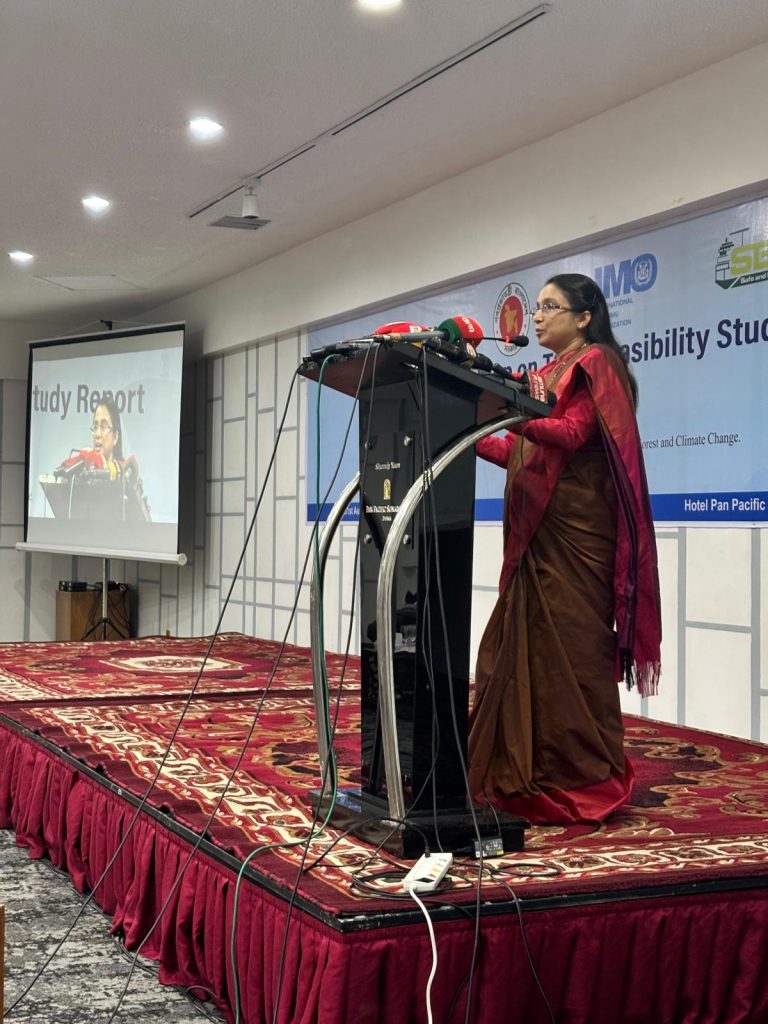
The feasibility study itself was presented by Mr. Sumiyuki Otsuki, who led the international expert team through nearly a year of technical analysis, stakeholder consultations, and engagement with all relevant ministries and government bodies. The presentation covered the proposed facility’s configuration, site selection, waste stream analysis, financing options, and the regulatory pathway to construction and operation.
The TSDF will be the first facility of its kind in Bangladesh, and its establishment has been a longstanding priority of the SENSREC programme. Today’s briefing represented the culmination of that effort — and the beginning of the critical next phase, in which government commitment and funding confirmation must translate the study’s findings into concrete action on the ground.
The SENSREC project is implemented by IMO with financial support from the Norwegian Ministry of Foreign Affairs, and aims to support the safe and environmentally sound recycling of ships in Bangladesh in line with the requirements of the Hong Kong International Convention.