


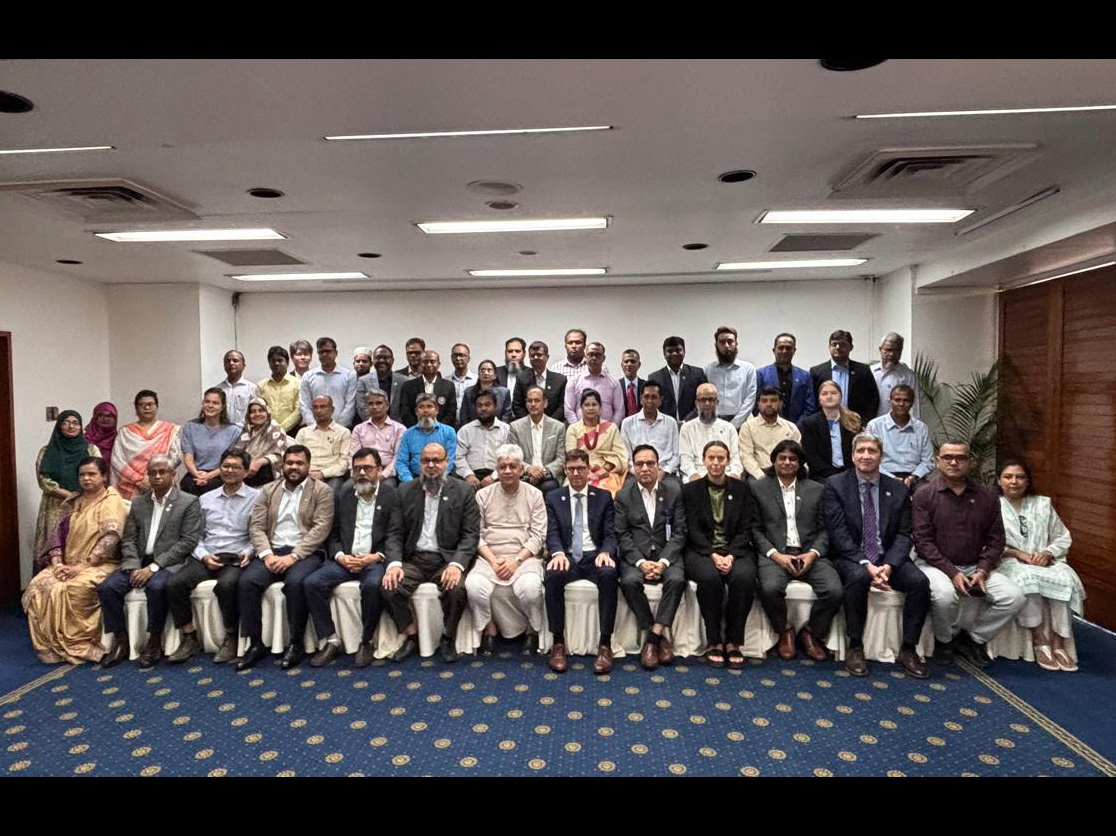
Legislative recommendations to strengthen Bangladesh’s ship recycling industry are set to progress through established national procedures toward eventual consideration by Parliament, following the completion of SENSREC Project Phase 3. The proposed reforms are some of the project outcomes that were reported during a dissemination workshop that was held in Dhaka on 28 October 2025. SENSREC Project supports implementation of the Hong Kong International Convention for the Safe and Environmentally Sound Recycling of Ships (HKC), which entered into force in June 2025.
Implemented under the International Maritime Organization (IMO) with funding from the Government of Norway, SENSREC has supported Bangladesh’s national efforts to strengthen the regulatory and technical frameworks underpinning hazardous waste management and occupational safety in the ship recycling sector.
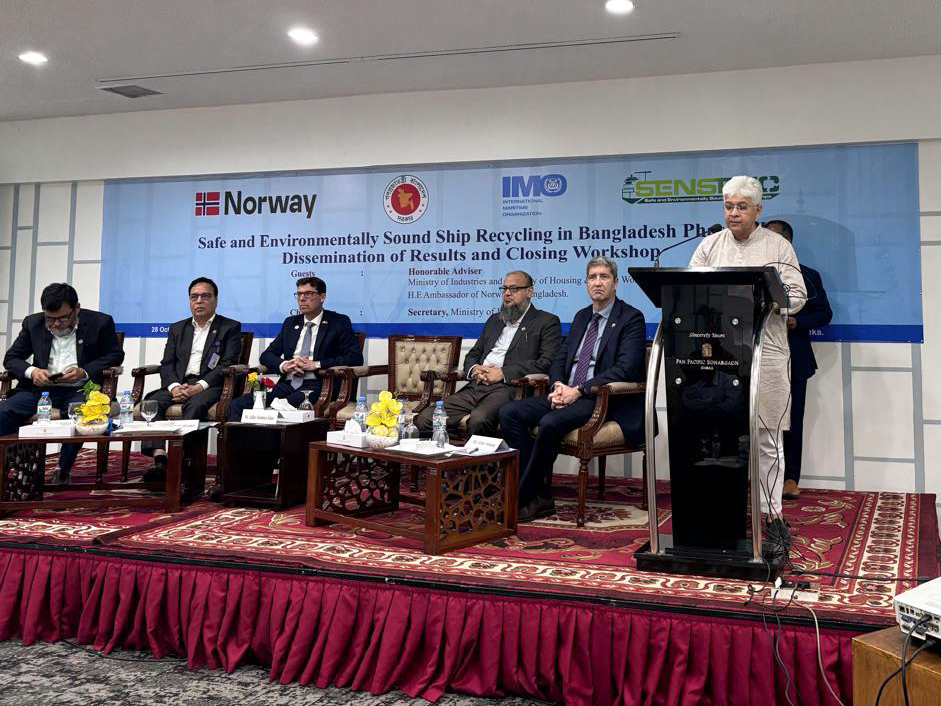
The Phase 3 closing workshop was attended by Honourable Adviser, Ministry of Industries, Mr. Adilur Rahman Khan; Secretary in the Ministry, Mr. Md Obaidur Rahman; Additional Secretary, Mr. Rashidul Hassan; Ambassador of Norway to Bangladesh, His Excellency, Mr. Håkon Arald Gulbrandsen; and officials from the International Labour Organization (ILO).
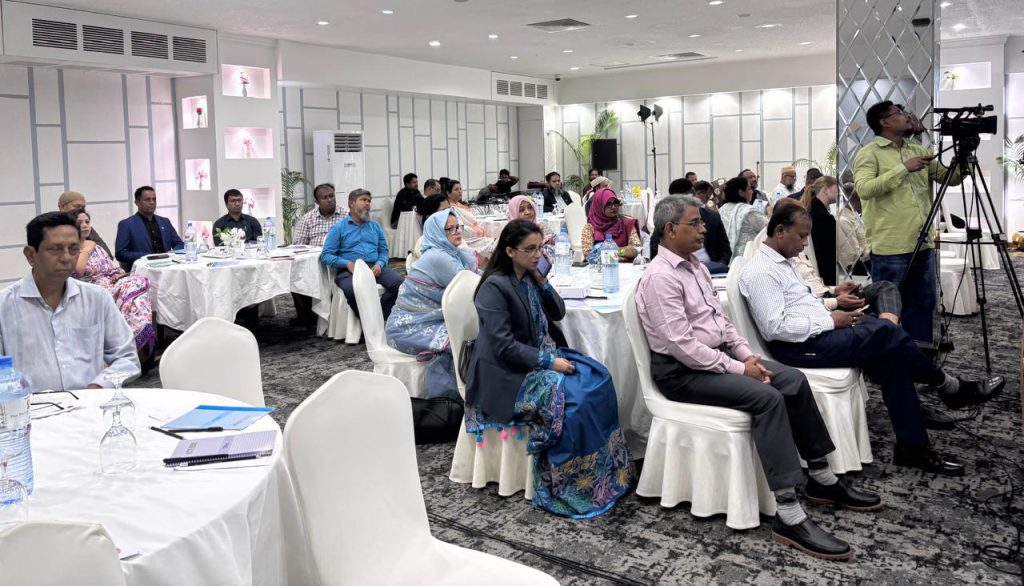
At the workshop, SENSREC’s Project Coordination Unit informed the Steering Committee and other stakeholders that during Phase 3, the project analysed relevant local legislation, facilitated technical training on hazardous waste management and HKC compliance of ship recycling yards. Additionally, the project developed guidance on transport systems and route optimization for hazardous waste generated by ship recycling.
SENSREC’s PCU reported that some additional activities would take place until 30 April 2026 to bridge the gap before start of the next phase. The work will include a training course on ship recycling plans and oversight of the completion of the feasibility study for a hazardous waste Treatment, Storage and Disposal Facility. The 2 activities will be funded by residual project funds.
The briefing outlined specific initiatives carried out in support of the increased participation of women in ship recycling which included publication of a gender sensitization manual for the ship recycling sector; a careers fair for women held in Chittagong; and production of a series of 3 video animation public service announcements.
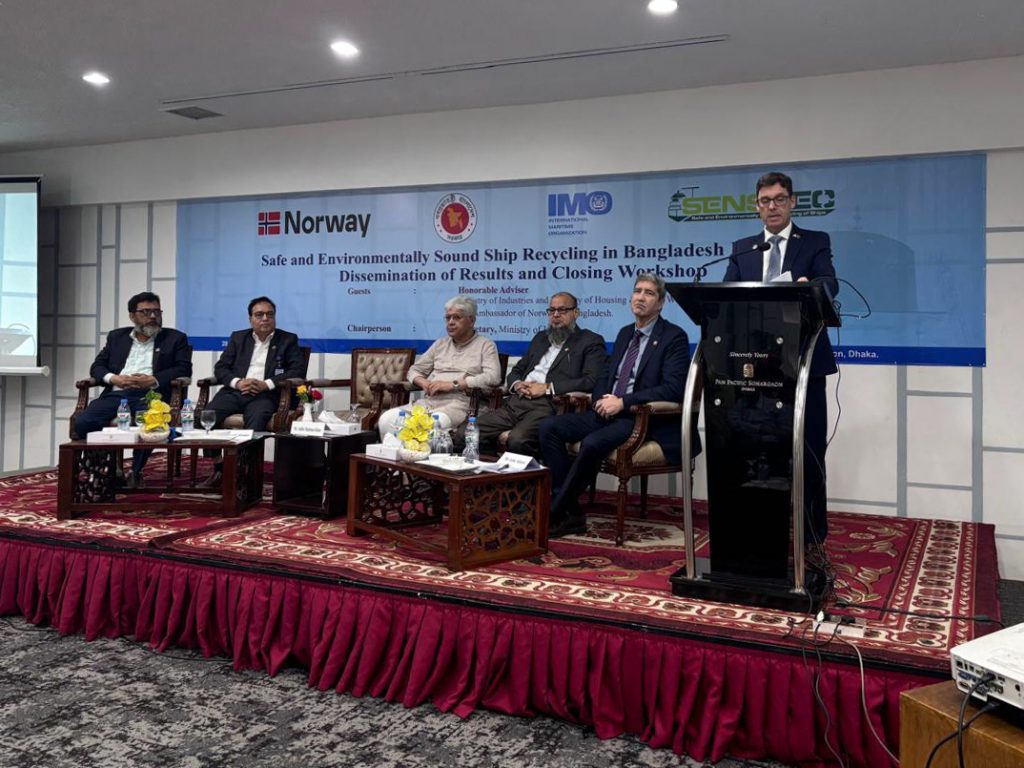
Following the closing workshop, an inception event for the proposed Phase 4 will be convened. The next stage proposes to build upon the foundations established during the previous phase and support the establishment of improved standards of environmental compliance and occupational safety and health at ship recycling yards. It is aimed at achieving a decrease in workplace accidents and a broadening of environmentally sound management of hazardous materials generated from the process of ship dismantling, aligned with the Hong Kong Convention.